
Financial stress is hitting Australians harder than ever. According to 9News, financial stress levels have reached a decade high, with one in five Australians watching their savings vanish and 15% accumulating or increasing existing debt. If that sounds all too familiar, take a deep breath – you’re not alone, and more importantly, you can take control.
Debt isn’t just a financial burden; it’s an emotional and mental weight, too. Sleepless nights, constant anxiety and the feeling of being trapped in a never-ending cycle – it’s exhausting. But here’s the good news, with the right strategy, you can stop debt from controlling your life and start taking back your financial power.
Let’s break it down.
Step 1: Get Real About Your Debt
The first step to managing debt is knowing exactly what you’re dealing with. That means facing the numbers – no more avoiding your bank statements or pretending those credit card bills don’t exist. Grab a pen, and list every debt you have, including:
✅ Outstanding balances
✅ Minimum monthly repayments
✅ Interest rates
This will help you figure out which debts need urgent attention and which ones you can chip away at over time.
Step 2: Take a Hard Look at Your Budget (Yes, Every Dollar!)
Before you can truly take control of your debt, you need to know exactly where your money is going. That means getting real with your budget – no guessing, no rounding up or down, just cold, hard numbers.
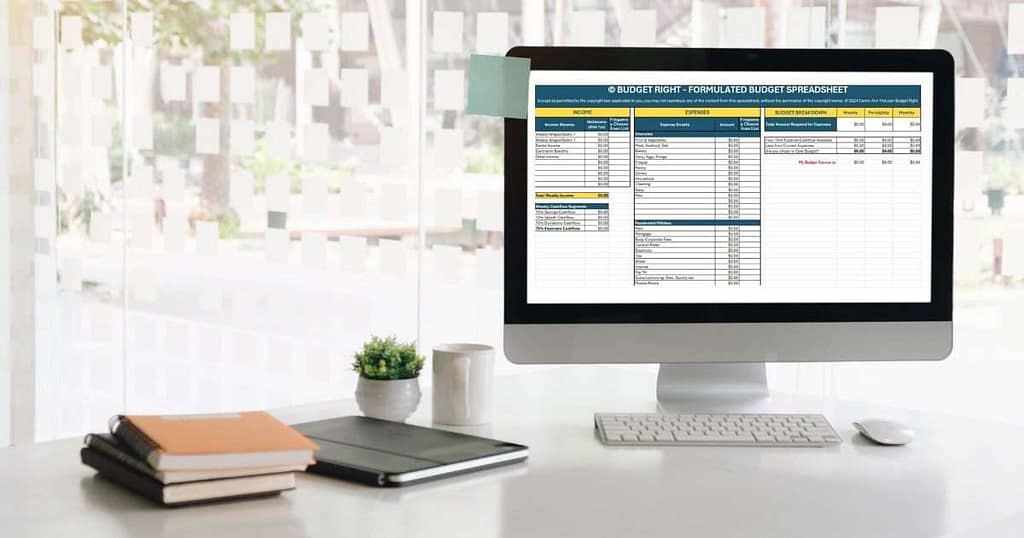
Record Every Dollar with the Budget Right Spreadsheet
Grab your Budget Right Spreadsheet and track:
📌 Your income (all sources)
📌 Every single expense – yes, even that sneaky $5 coffee! Spending $27.40 a day on miscellaneous things add up to $10,000 a year.
📌 Automatic payments – are there any subscriptions you thought you cancelled?
Check your bank statements carefully. You might be surprised to find old memberships, unused apps or other charges quietly draining your cash.
Understanding the 70/10/10/10 Cashflow Rule
A simple way to structure your budget is using the 70/10/10/10 rule:
✔️ 70% for living expenses (rent, bills, groceries, transport, etc.)
✔️ 10% for savings (building your emergency fund)
✔️ 10% for investments or debt reduction (growing your wealth or smashing debt)
✔️ 10% for giving or personal growth (donations, courses, or something that adds value to your life)
If your living expenses are eating up more than 70% of your income, it’s time to get ruthless.
Where Can You Cut Back?
💡 Subscriptions & memberships – Are you paying for services you don’t use? Cancel them.
💡 Groceries & dining out – Meal plan, switch to home-cooked meals and look for supermarket specials.
💡 Impulse buys – Unsubscribe from marketing emails and use the 24-hour rule before making a purchase.
💡 Energy bills – Compare providers and switch to a better deal.
💡 Transport costs – Can you carpool, use public transport or walk more?
Every dollar you free up can go toward paying off debt faster. Be brutal. Short-term sacrifices lead to long-term financial freedom!
Step 3: Use Your EXCESS to Pay Off Debt Faster
Now that you’ve adjusted your budget, it’s time to put your EXCESS to work and accelerate your debt payoff.
What is EXCESS?
EXCESS is the extra money you free up each month after covering your essential expenses. You can calculate this using the Budget Breakdown section of your Budget Right Spreadsheet.
💡 Most people can find anywhere between $300 to $700 per month just by cutting back on non-essentials and shopping around for better deals!
How to Use Your EXCESS to Smash Your Debt
✅ List all your debts – Write down the balance and minimum monthly payment for each one.
✅ Start with the smallest debt – Add your EXCESS to the minimum payment and keep paying that amount until the debt is gone.
✅ Use extra cash to speed things up – If you sell something (like unused household items) or get a financial windfall, put that money straight onto your smallest debt.
✅ Cut up paid-off credit cards & BNPL accounts – Celebrate your progress by removing the temptation to fall back into debt.
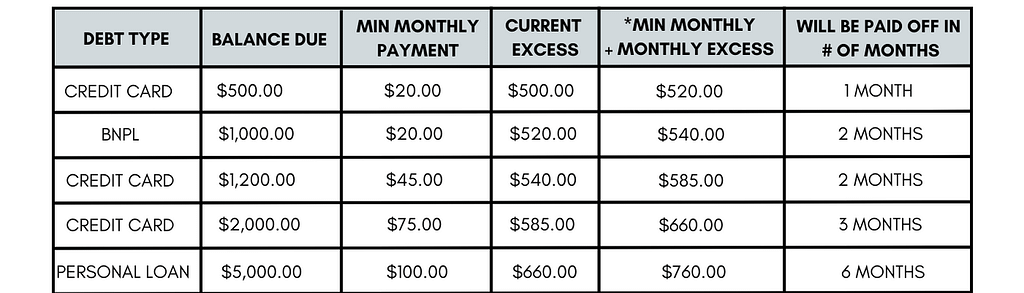
Once a debt is paid off, take that same EXCESS + previous minimum payment and apply it to the next debt. This creates a snowball effect, allowing you to clear debt much faster than you thought possible.
Here’s an example of how you could pay off $9,700 in 14 months if you find $500 excess per month. This will differ for everyone, however even if your EXCESS is small, every little bit helps. The key is consistency. Stick with the plan, and you’ll see results faster than you expect!
Step 4: Negotiate Your Way to Lower Payments
Did you know you can negotiate with your lenders? Many banks and credit card providers offer hardship programs that allow you to:
📉 Lower your interest rate
📉 Reduce your monthly repayments
📉 Pause payments temporarily
A simple phone call could save you hundreds, so don’t be afraid to ask!
Step 5: Build a Safety Net to Stay Out of Debt
Once you start clearing your debt, the next step is making sure you don’t fall back into the cycle. Start small:
🏦 Set up an emergency fund (even $10 a week adds up!)
🏦 Automate your savings so you don’t have to think about it
🏦 Stick to a realistic budget that works for you
Need help getting started? Grab my Budget Right Spreadsheet which is designed to make budgeting simple and stress-free. Free when you subscribe to the Budget Right Bulletin.
You’re in Control
Debt can feel overwhelming, but remember, you have more power than you think. Every small step counts and the sooner you start, the sooner you’ll be on your way to financial freedom.
Want more practical budgeting and debt-busting tips? Follow me on Instagram and Facebook for daily inspiration and real-life money advice. And if you’re ready to take control of your finances once and for all, grab your copy of Budget Right: Eliminate Debt and Improve Your Financial and Mental Wellbeing here!