
Are you ready to get financially prepared for 2025? As we approach the new year, now is the perfect time to take charge of your finances. Whether you want to eliminate debt, build savings, or simply feel more in control, setting clear goals and following a plan can make all the difference. Let’s explore practical steps to help you become financially prepared for 2025 and beyond.
Why Financial Goals Matter
Being financially prepared for 2025 isn’t just about crunching numbers – it’s about creating the life you want. Imagine stepping into 2025 with confidence, knowing you have a clear plan for your money, where every dollar has a purpose. Whether it’s saving for a dream holiday, paying off debt, or stress-free bill payments, financial goals can inspire and motivate you to take action.
Reflect and Reset
Take a moment to look back on 2024. What went well financially? What could have been better? Jot down your wins and areas for improvement. Use these reflections as a springboard for setting new goals.
5 Steps to Financial Success in 2025
1. Understand Your Spending Habits
The first step to becoming financially prepared for 2025 is understanding where your money is going. For the next 30 days, track every dollar you spend. Use the Budget Right Spending Tracker and Spreadsheet or even a notebook. This exercise isn’t about judgment; it’s about awareness.
Being intentional with your money starts here. Every dollar should have a purpose, whether it’s covering essentials, building your savings, or treating yourself. Did you know that spending just $27.40 a day on miscellaneous things – like coffee runs, takeaway, or impulse buys adds up to $10,000 a year? Imagine what you could do with that money instead!
Tip: Look for areas where you can cut back without sacrificing joy. For example:
- Brew your coffee at home instead of buying it daily.
- Plan meals to reduce food waste and avoid last-minute takeaway.
- Set a “fun money” limit each week to curb impulse spending while still enjoying life.
Tracking your spending helps you identify patterns and make intentional choices about where your money goes. It’s the first step to aligning your spending with your goals.
2. Set SMART Goals
Creating goals that are Specific, Measurable, Achievable, Relevant, and Time-bound (SMART) is the foundation of financial success. Why? Because vague goals like “I want to save money” often lack direction and urgency, making them easy to abandon. SMART goals, on the other hand, give you a clear roadmap and measurable milestones to track your progress.
For example, “Save $1,200 by December 31, 2025, by setting aside $100 monthly” is a clear and actionable goal. It’s specific (saving $1,200), measurable (track monthly contributions), achievable (fits within your budget), relevant (supports financial stability), and time-bound (has a deadline).
Why SMART Goals Matter:
- Clarity: You know exactly what you’re working toward and how to get there.
- Motivation: Breaking a big goal into smaller steps keeps you motivated as you achieve each milestone.
- Accountability: It’s easier to stay on track when you can measure your progress.
- Focus: SMART goals help you prioritise your efforts and avoid distractions.
Visualise Your Goals with a Vision Board
Creating a vision board can make your goals feel more tangible and exciting, bringing them to life in a way that inspires action. Here’s how to create a vision board to stay inspired:
- Gather Supplies: Get a poster board, scissors, magazines, markers, and glue.
- Define Your Goals: Write down your financial SMART goals (e.g., saving for a holiday, paying off debt, or building an emergency fund).
- Find Images and Words: Look for pictures, quotes, or words in magazines that represent your goals. For instance, a beach photo for your holiday fund or a piggy bank for savings.
- Assemble Your Board: Arrange the images and words on your board in a way that inspires you. Be creative and have fun with it!
- Place It Where You’ll See It: Hang your vision board in a spot where you’ll see it daily, like your bedroom or office to keep your goals top of mind.
Bonus Tip: Pair your vision board with a SMART goal tracker. Each time you hit a milestone, celebrate your progress and add a sticker or note to your board!
Setting SMART goals and visualising them can transform your financial journey from overwhelming to empowering. Let your vision board remind you of the life you’re building, one step at a time.
3. Create a Budget That Works for You
A budget is your roadmap to being financially prepared for 2025. Think of it as your financial GPS, guiding you toward your goals while ensuring you enjoy the journey. One effective and simple method is the 70/10/10/10 rule:
- 70% for expenses (bills, groceries, rent/mortgage)
- 10% for savings (future you will thank you!)
- 10% for giving (share the love and make an impact)
- 10% for splash cash (fun money for guilt-free spending)
Why This Rule Works:
- It’s flexible! Adjust the percentages to suit your circumstances.
- It prioritises what matters: financial security, generosity, and joy.
- It ensures you’re not just living paycheck to paycheck – you’re building a life.
Budgeting Made Fun:
Imagine your money as a pizza. The 70/10/10/10 rule divides it into four delicious slices:
- The Big Slice (70%): This is your base – the essentials that keep life running smoothly, like rent, utilities, and groceries. Think of it as the cheesy goodness that holds everything together.
- The Savings Slice (10%): This is your future crust! It gives you stability and a safety net, whether for emergencies or retirement.
- The Giving Slice (10%): Sharing a slice of your pizza with others not only spreads joy but also creates a sense of purpose and connection.
- The Fun Slice (10%): This is the extra toppings – whatever brings you happiness, from movie nights to a new outfit. Enjoy it guilt-free because it’s baked into the plan!
Adjust for Your Needs:
Not everyone’s financial pie looks the same, and that’s okay! If you have high debt repayments, you might allocate 15% to debt reduction and 5% to splash cash for now. While you can adjust these percentages to fit your financial situation, always prioritise savings and debt repayment.
4. Tackle Debt Strategically
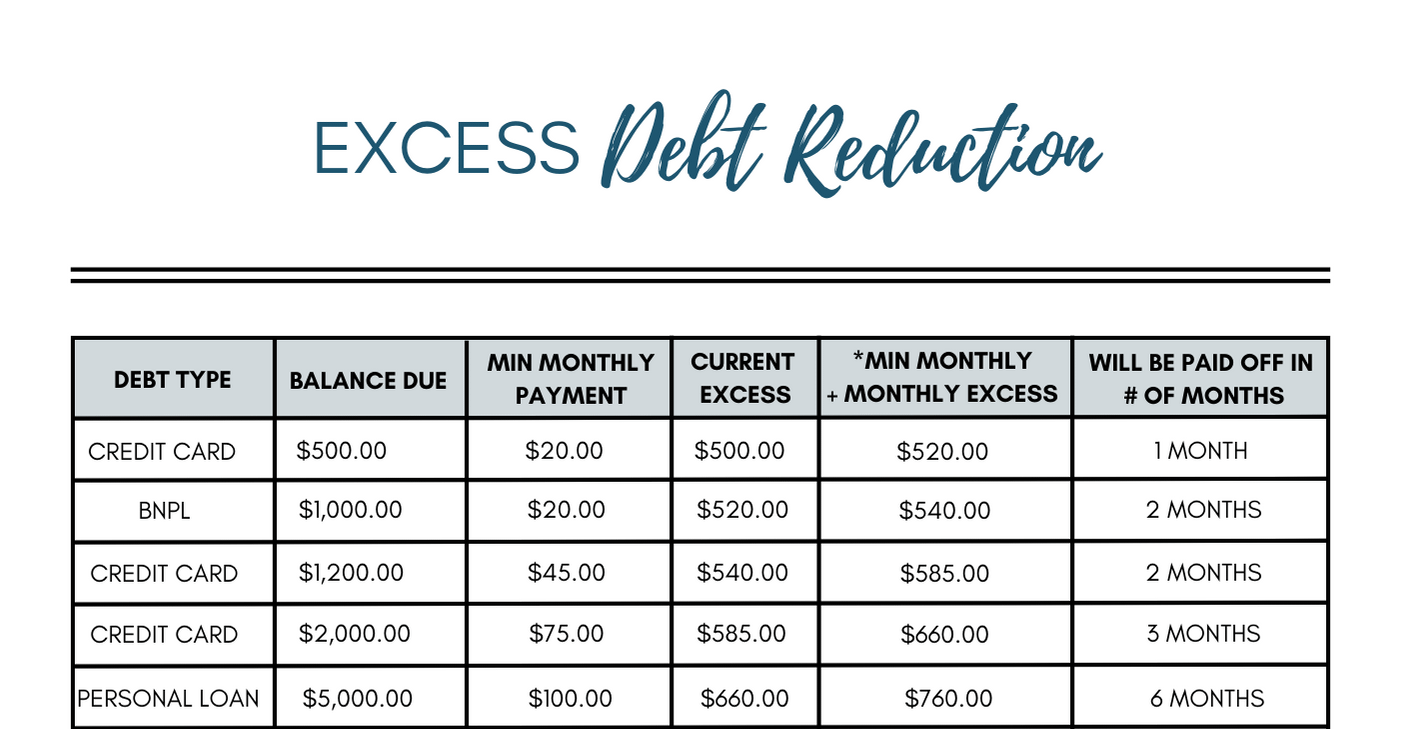
If debt is holding you back, tackle it head-on. Start by using your Budget Excess (covered in Chapter 11 of Budget Right).
Write all your debts from smallest to largest, then add your Budget Excess to the minimum payment of the smallest debt until it’s paid off. Then, roll that payment into the next debt.
Example: If you’re paying $50/month on a small loan and clear it, add that $50 to the next debt’s payment. Example:
Bonus: Use any extra cash, like a tax refund, bonuses, or proceeds from a garage sale to make additional payments.
5. Automate Your Savings
Make saving effortless by setting up automatic transfers to a high-interest savings account. Even $20 a week adds up to over $1,000 in a year!
Fun Challenges to Try in 2025
- No-Spend Month: Pick a month to spend only on essentials.
- Round-Up Savings: Use apps that round up your purchases and save the spare change.
- 52-Week Challenge: Save $1 the first week, $2 the second week, and so on. By the end of the year, you’ll have $1,378!
Your 2025 Financial Motto
“Small steps lead to big changes.” Every dollar saved or debt paid is a step closer to financial freedom.
Are you ready to take control of your finances in 2025? Share your goals in the comments below and let’s cheer each other on!