
Financial stress, money overwhelm, financial shame, cost-of-living pressure
By Carrie-Ann McLean | Author | Speaker | Budgeting Coach | Money Mindset Educator
The Truth Most People Need to Hear Right Now
If you’ve ever said to yourself, “I’m just bad with money,” you’re not alone.
I hear this from people all the time. Everyday Australians who feel embarrassed about their finances, frustrated with their situation and convinced they’ve somehow failed.
But here’s something important I want you to know:
You’re most likely not bad with money.
You’re likely just carrying too much.
Too many bills.
Too many responsibilities.
Too much pressure – with not enough breathing room.
And in today’s cost-of-living environment, that’s not a personal failure. It’s a reality many households are facing.
According to the Australian Bureau of Statistics, household spending pressures remain high across essentials such as groceries, rent and insurance, areas most people simply cannot avoid.
So if things feel harder than they used to, there’s a reason.
What Feeling ‘Bad With Money’ Often Really Means
When people describe themselves as “bad with money,” it’s rarely because they don’t care.
More often, it means:
- They feel overwhelmed
- They feel behind
- They feel judged – by others or themselves
- They feel exhausted from trying to keep up
And sometimes, it means they’ve been surviving, not thriving.
You might be:
- Managing rising grocery costs
- Covering unexpected bills
- Supporting children, family, or others
- Living on an income that hasn’t kept pace with expenses
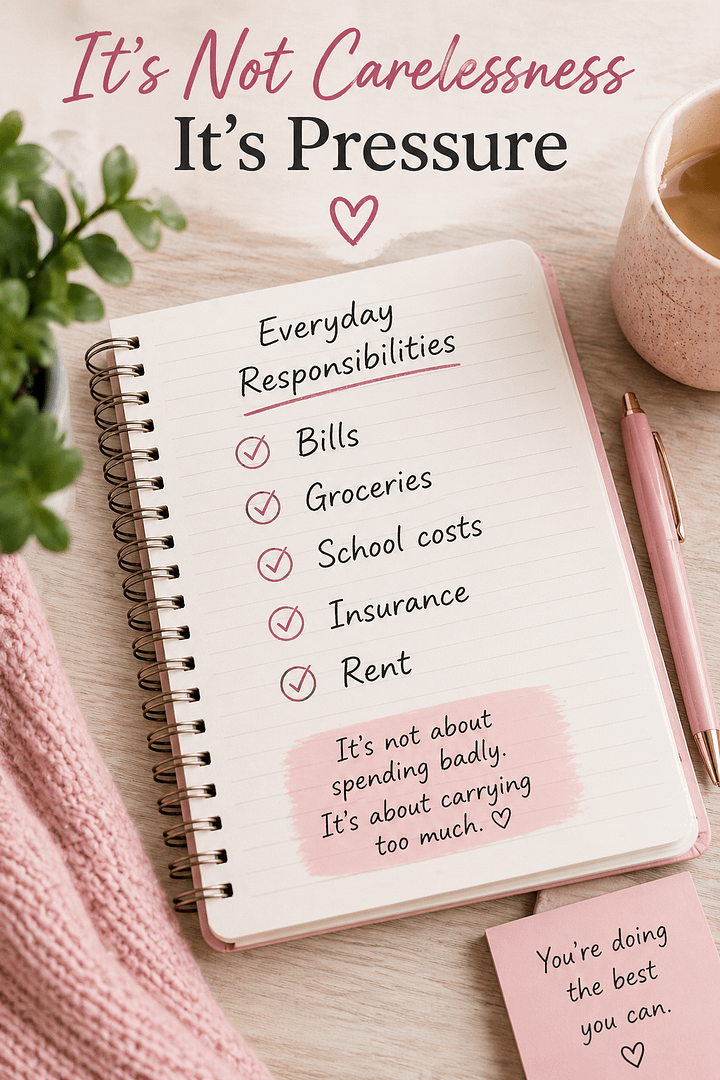
That’s not carelessness.
That’s pressure.
And pressure changes how we make decisions.
The Hidden Weight Many People Are Carrying
Money stress isn’t just about numbers.
It’s emotional.
When you’re under financial pressure, your brain moves into survival mode. You focus on immediate needs, such as paying the next bill, buying groceries and keeping things afloat.
Long-term planning can feel impossible when short-term survival takes priority.
This is something researchers at the Australian Securities and Investments Commission highlight through their financial capability work – that financial hardship and stress can make it harder for people to manage money confidently and seek help when they need it.
(Source: ASIC Report 782 – Hardship, hard to get help, 2024)
That’s not weakness.
That’s how stress works.
And once avoidance begins, it becomes easier to believe you’re failing, even when you’re doing your best.
Why Shame Makes Money Feel Harder
Shame is one of the biggest barriers to financial progress.
Not lack of intelligence.
Not lack of effort.
Not lack of care.
Shame.
Shame sounds like:
- “I should be better at this.”
- “Everyone else seems to manage.”
- “I’ve made too many mistakes.”
But shame doesn’t fix problems.
It hides them.
It stops people from asking questions.
From opening bills.
From checking balances.
From creating plans.
And the longer shame sits in the background, the heavier money feels.
That’s why removing shame is often the first real step forward.
The Cost-of-Living Reality Most Households Are Facing
Let’s be honest… managing money today looks very different from even a few years ago.
Groceries cost more.
Insurance costs more.
Utilities cost more.
Meanwhile, many wages haven’t increased at the same pace.
Recent updates from the Reserve Bank of Australia show that inflation pressures increased during 2025 and are expected to remain elevated into 2026 – factors that directly affect household budgets across Australia. (Source: RBA, Statement on Monetary Policy – February 2026)
So if your budget feels tighter than it used to, that’s not imagination.
It’s economics.
And it affects people who once felt financially confident just as much as those already struggling.
What ‘Carrying Too Much’ Actually Looks Like
Sometimes financial stress isn’t about spending badly. It’s about carrying more than your income comfortably supports.
This might include:
- Multiple debts
- Rising living costs
- Unexpected life changes
- Supporting dependents
- Medical or emergency expenses
- Reduced income or unstable work
Individually, each challenge is manageable.
Together, they become overwhelming.
And overwhelm often leads to:
- Avoidance
- Emotional spending
- Financial fatigue
- Loss of confidence
Not because you don’t care, but because you’re tired.
A Gentle Shift: From Blame to Understanding
Before you change your budget, your mindset needs a small shift.
Not dramatic.
Not overwhelming.
Just gentle.
Instead of asking: “What’s wrong with me?”
Try asking: “What am I carrying right now?”
This question changes everything.
Because when you identify the load you’re carrying, you can begin to adjust it.
Not all at once.
Not perfectly.
But gradually.
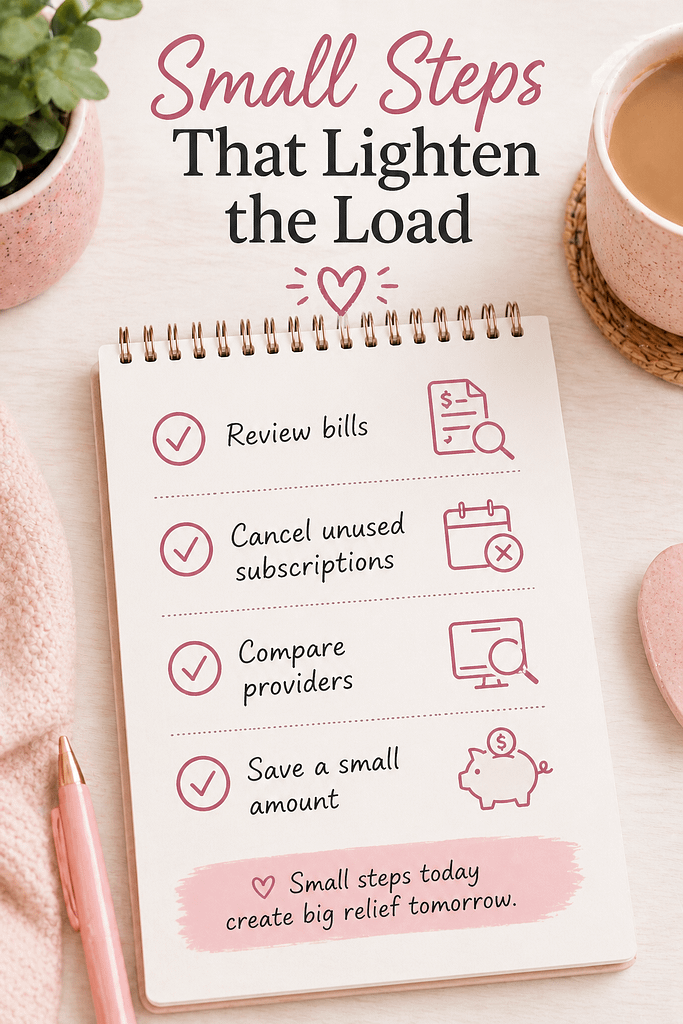
Small Steps That Lighten the Load
When you feel overwhelmed, big changes feel impossible. That’s why small steps matter.
Try starting with just one:
- List your regular bills
- Review one expense category
- Cancel something you no longer use
- Compare one provider
- Set aside even a tiny savings amount
Progress doesn’t come from perfection. It comes from consistency.
If you’re not sure where to begin, these blogs may help –
Both offer simple, manageable starting points without pressure.
Why Your Worth Is Not Measured by Your Bank Balance
Money struggles often affect self-worth.
But your value is not determined by:
- Your income
- Your debt
- Your savings
- Your financial mistakes
You are not your bank balance.
You are a person navigating a complex financial world – one that has changed dramatically in recent years.
And the fact that you’re reading this right now tells me something important:
You care.
And caring is the first step toward change.

A Compassionate Reminder for Today
If your finances feel messy, your bills feel overwhelming or your confidence feels shaken, please know this is not a sign that you’ve failed.
More often, it means you’re carrying more pressure than your budget was ever designed to handle.
Pause for a moment and take a slow breath. Give yourself permission to stop and recognise that you’re doing your best in a challenging season.
Remind yourself: you are not bad with money – you are carrying too much.
Rising costs, everyday responsibilities and unexpected expenses can place heavy demands on any budget.
But loads can be adjusted, support can be found, and plans can be built over time.
Small, steady actions make a difference, and every step you take, no matter how small – moves you forward.
One small step at a time is enough.
Where to Start If You Feel Overwhelmed
If you’re ready to take a gentle first step, here are three places to begin:
- Download your free Bill Checklist to see exactly what’s due and when
- Explore your spending patterns using a simple tracker (Budget Right Budget Spreadsheet)
- Book a Budget Coaching Session if you’d like supportive guidance
You don’t have to do everything at once.
You only need to start somewhere.
Final Thoughts
Being “bad with money” is rarely the real issue. More often, people are managing more pressure than their budget was ever designed to carry. And when pressure builds, overwhelm follows.
But understanding what you’re carrying and taking small steps to lighten the load, creates space for change.
- Not overnight.
- Not perfectly.
- But steadily.
And steady progress is what builds confidence.
Support Note
If financial stress is affecting your mental health, you are not alone.
Support is available:
Australia
- Lifeline – 13 11 14
- Beyond Blue – 1300 22 4636
- Salvation Army – 13 72 58
International
- Visit https://findahelpline.com/ to locate support services in your country.
About the Author
Carrie-Ann McLean is an Author, Speaker, Budgeting Coach, and Money Mindset Educator who helps everyday Australians build stronger financial habits without guilt, shame, or overwhelm.
After overcoming homelessness, addiction, and significant financial hardship, Carrie-Ann now shares practical tools and compassionate strategies through her Budget Right programs, book, and workshops – helping people rewrite their money story one step at a time.
Disclaimer
This article provides general educational information only and is not financial, legal, or accounting advice. Always consider your personal circumstances and seek professional advice where necessary.