
Financial stress • cost of living Australia • money mindset • budgeting support
By Carrie-Ann McLean | Author | Speaker | Budgeting Coach | Money Mindset Educator
Why Financial Pressure Feels So Heavy Right Now
There’s a quiet frustration many Australians are carrying right now.
You pay your bills. You try to budget. You cut back where you can. You work hard. And yet somehow… you still feel behind financially.
- Behind on savings.
- Behind on debt.
- Behind on bills.
- Behind on life.
If you’ve been feeling this way lately, you are far from alone.
Across Australia, many people are doing everything “right” and still feeling stretched by rising living costs, financial pressure and emotional exhaustion. And over time, that constant pressure starts affecting more than just your bank balance.
It affects your confidence too.
Why So Many People Feel Financially Behind Right Now
The cost of living pressure hasn’t disappeared.
Groceries remain expensive.
Insurance premiums continue to rise.
Rent and mortgage repayments are still placing pressure on households.
Utility bills feel heavier than they did a few years ago.
According to research from NGM Group reveals, many Australian households continue adjusting spending habits due to ongoing cost pressures.
At the same time, social media creates the illusion that everyone else is financially thriving. You see:
- Overseas holidays
- New cars
- Home renovations
- Expensive dinners
- Perfect-looking lives
Meanwhile, you might be sitting at home trying to work out how to stretch your groceries until payday.
That comparison can quietly make you feel like you’re failing.
But financial struggle is often far more common than people admit publicly.
Feeling Behind Financially Is Not Always About Money
This is the part people don’t talk about enough. Sometimes the feeling of being “behind” isn’t only about numbers. It’s about emotional load.
When your brain is constantly thinking about:
- Bills
- Debt
- Unexpected expenses
- Future worries
- Rising costs
- Lack of savings
…it becomes mentally exhausting.
Financial stress can affect sleep, confidence, relationships, motivation and even your ability to make decisions clearly. And when you’re emotionally exhausted, even simple money tasks can start feeling overwhelming.
That doesn’t mean you’re lazy. It doesn’t mean you’re irresponsible.
It means you’re human.

The Hidden Pressure of “Keeping Up”
Many people are spending money trying to avoid feeling left behind. Not because they’re reckless. Because they’re tired of feeling excluded.
Sometimes this looks like:
- Using Afterpay for things you don’t truly need
- Saying yes to social events you can’t comfortably afford
- Buying small “pick-me-up” purchases after stressful days
- Upgrading phones, cars or clothes to feel more “successful”
- Avoiding bank balances altogether because it feels emotionally draining
These decisions often come from emotion, not stupidity. Money and self-worth are deeply connected for many people.
That’s why shame-based budgeting advice rarely works long-term. People don’t need more guilt. They need support, education and breathing room.

Why Budgeting Feels Harder Than It Used To
Years ago, many households had a little more breathing room in their budget. There was often more flexibility to absorb unexpected expenses or rising costs without feeling immediate financial pressure.
Today, even people on decent incomes can feel stretched. When groceries, fuel, insurance, rent and utilities all increase at the same time, budgeting becomes far less about “cutting luxuries” and much more about trying to make essential expenses fit within the same income.
That is why old-fashioned advice like “Just stop buying coffee” can feel frustrating and disconnected from reality. For many people, the issue is no longer careless spending or too many luxuries. The real challenge is ongoing financial pressure coming from almost every direction.
Budgeting still matters enormously, but modern budgeting needs to look different from the rigid approaches often promoted in the past.
Today, budgeting needs to focus more on flexibility, emotional wellbeing and realistic planning. It needs to help people improve cashflow awareness, reduce financial stress and make small sustainable improvements over time – not chase perfection.
Because financial wellbeing is not built through shame or impossible standards. It is built through practical habits, self-awareness and small consistent steps that feel manageable in everyday life.
You may also enjoy reading:
Small Signs You’re Actually Making Progress
When people feel behind financially, they often overlook the progress they are already making. The truth is, progress does not always look dramatic. It is not always a large savings account, a completely debt-free life or a perfect budget.
Sometimes progress looks much quieter than that.
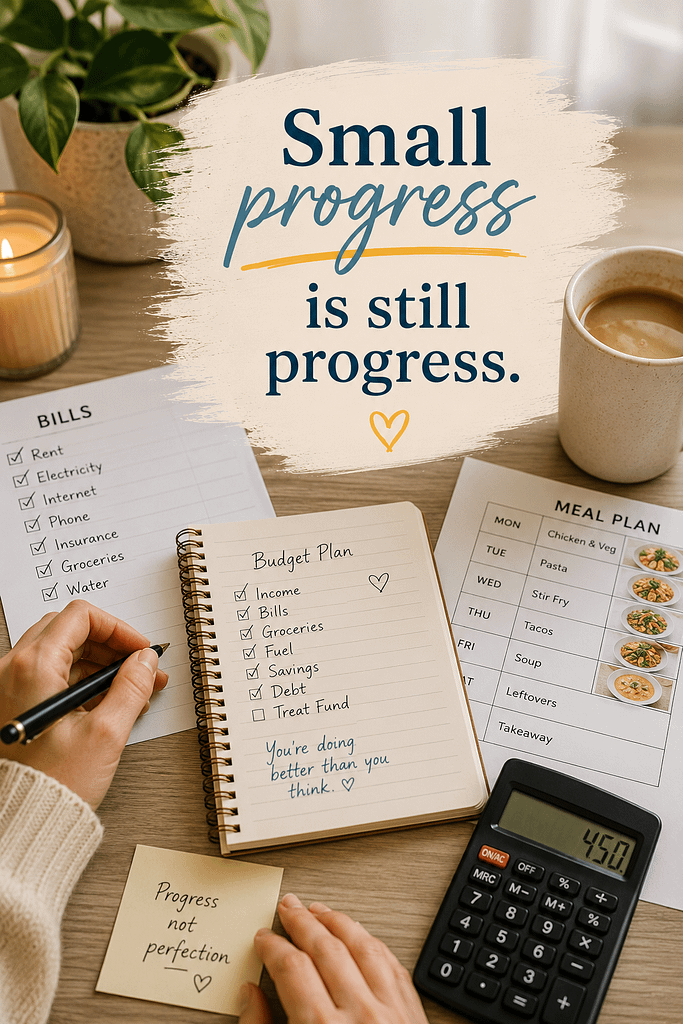
It might be finally opening your bills instead of avoiding them. It could be checking your bank account more regularly so you feel more aware and in control of your money. Sometimes it is cancelling one unused subscription, meal planning for the week or choosing to cook at home a little more often.
Progress can also look like asking for help, learning about budgeting or simply starting again after a difficult financial period. Even paying a small extra amount toward debt matters more than you may realise.
These small actions may not feel life-changing in the moment, but they slowly build confidence, awareness and stronger habits over time.
Financial wellbeing is usually created through small repeated actions and steady progress. Not overnight transformations.
And every time you take one small positive step, you are moving forward.
What To Do If You Constantly Feel Behind Financially
You do not need to completely rebuild your life overnight. Instead, focus on reducing pressure one step at a time.
1. Stop Comparing Your Financial Life to Social Media
Most people only share highlights. Very few people post:
- debt stress
- money arguments
- declined cards
- financial anxiety
- sleepless nights about bills
Comparison creates shame. Shame often creates avoidance. And avoidance makes finances feel even heavier.
Protect your peace where possible.
2. Focus on Cashflow Before Perfection
A perfect budget is not the goal. Breathing room is.
Start by asking:
- What money is coming in?
- What absolutely must be paid first?
- Where are small leaks happening?
- What can be simplified?
Simple awareness creates powerful change over time.
3. Build Financial Confidence Slowly
Confidence with money is rarely instant. It grows through repetition.
Every small financial decision you improve helps rebuild trust in yourself. That’s important. Because many people who feel “bad with money” are actually people who’ve been under financial pressure for a very long time.
There is a difference.
A Gentle Reminder If You’re Feeling Behind
If your finances feel overwhelming right now, please remember this – Being financially stretched does not mean you are failing at life. It means life has become expensive, emotionally heavy and difficult for many people. And despite that, you are still trying. That matters.
You do not need to have everything figured out today. You just need one small next step. One calmer decision. One small improvement. One moment of honesty instead of avoidance.
That’s how financial confidence begins rebuilding – slowly, gently and steadily.
With love, Carrie-Ann

Support Note
If financial stress is affecting your mental health, you are not alone.
Support is available:
Australia
- Lifeline – 13 11 14
- Beyond Blue – 1300 22 4636
- Salvation Army – 13 72 58
International
- Visit https://findahelpline.com/ to locate support services in your country.
About the Author
Carrie-Ann McLean is an Author, Speaker, Budgeting Coach and Money Mindset Educator who helps everyday Australians improve their financial wellbeing without guilt, shame or overwhelm. After overcoming addiction, homelessness and significant debt herself, she now shares practical, compassionate tools that help people rebuild both financially and emotionally.
Disclaimer
This article is general educational information only and does not constitute financial advice. Please seek professional advice for your personal financial situation.